

The 24-Hour Follow-Up Rule: Why Immediate Momentum is Your Best Sales Asset
A prospect forgets the shape of your conversation faster than they forget your name. That decay is why the 24-hour follow-up window has become the working benchmark for professional responsiveness: send within a day, and you are still part of the conversation the buyer is having internally. Wait a week, and you are a stranger asking for time.
Recency bias does real work here. Whatever a buyer discussed most recently carries disproportionate weight when they evaluate options, so a fast follow-up after a sales call keeps your framing on the table while competitors fade.
Your email after a sales call should do three jobs: recap the priorities the prospect named in their own words, confirm the specific next step and its date, and preempt the objection you heard forming. A thank-you note expresses gratitude. A strategic follow-up moves the deal.
How to Structure a High-Conversion Follow-Up Email
Your follow-up email subject line after a phone call should name the work, not the gesture – “Next steps for the Q4 onboarding rollout” beats “Checking in” every time. Open by referencing one specific moment from the call, which signals you listened and earns the next ten seconds. Then build the body around their pain points, not your capabilities. A strong call follow-up email reads like their meeting notes, improved.
Mastering the 2-2-2 Rule in Modern Sales Sequences
The 2-2-2 rule sets a cadence: reach out two hours after the call, again two days later, and once more at two weeks. Each touch carries new information, never a nudge. For service businesses where trust is the product, stretch the intervals and vary the channel – email at two hours, a LinkedIn comment or resource share at two days, a brief call at two weeks. Rotation keeps a follow-up sales call email from reading as pressure.
Tactical Scenarios: Tailoring Your Outreach to the Prospect’s Signal
“Send me an email” means two very different things. When it arrives as a brush-off, it is a polite exit, and your reply should test for real interest with a single pointed question. When it follows genuine engagement – questions about timelines, pricing, implementation – it is a request for ammunition they can forward internally.
Strip the anti-patterns first. “Just checking in,” “wanted to touch base,” and “circling back” all announce that you have nothing new to say. Replace them with the reason you are writing.
A follow-up email after a sales presentation to an engaged prospect should extend the discussion: address the specific concern their CFO raised, attach the one-page summary they can circulate. A cold intro follow-up needs far less – a reminder of context and one clear ask.
The best follow-up email after a sales call never reports on itself. Most follow-up email examples after a sales call fail because they share status; the effective ones share value the buyer did not have yesterday.
How to Write a Follow-Up Email After a Cold Call
A follow-up email after a cold call works best when it opens with permission: reference the exact moment they agreed to receive information. That single line separates you from unsolicited outreach. Keep the whole message under 150 words – a new contact owes you nothing yet. Any sample follow-up email after cold call worth copying ends with one action, such as booking a 15-minute session. A cold call email follow-up with two asks gets neither.
Professional Phrases for Polished Communication
When a deadline approaches, name it neutrally: “To hold the start date we discussed, I’d need your sign-off by Friday.” No accusation, just logistics. Move from recap to close with presumptive language – “I’ve blocked Thursday at 10 for the technical review” – rather than asking permission to continue. Retire “Let me know if you have questions” in favour of a real prompt: “Which part of the scope feels least settled?” A follow-up email after a business phone call, or even a formal follow-up letter after a sales call, should always end on a question the buyer can answer in one line.
Efficiency vs Personalisation: Leveraging AI and Automation in 2026
AI note-takers now transcribe a call and produce a drafted follow-up email after the call before you leave the room. Evaluate these tools on one question: does the draft capture nuance, or only topics? A transcript summary that lists “discussed pricing” is useless. One that surfaces the buyer’s hesitation about implementation staffing is a genuine head start.
Human-in-the-loop is the methodology that holds. Fully automated sends flatten tone and miss the emotional register of the call – fatal when the deal is a high-ticket service, and the founder is the product.
Manual outreach wins on depth and loses on consistency. Templates win on speed and lose on resonance. AI-assisted workflows sit between: the machine drafts, the founder edits the two sentences that matter.
Choose tools on CRM integration, transcript fidelity, and whether the draft is editable before it sends.
Comparison: Follow-Up Methods and Their Impact
| Method | Time to send | Relationship depth | Best for |
|---|---|---|---|
| Manual personalization | Slowest | Highest | Strategic, high-value deals |
| Standard template | Fastest | Lowest | Early-stage, high-volume outreach |
| AI-assisted draft | Fast | Moderate to high with editing | Founder-led pipelines at scale |
When deal size justifies the minutes, skip the inbox entirely – a phone call follow-up email confirming what you just said aloud converts better than either alone.
Common Failure Modes: Why Follow-Ups Die in the Inbox
The wimpy close kills more deals than bad pricing. “Let me know your thoughts” gives a busy buyer permission to do nothing, and ghosting follows. Equally damaging is template loyalty: if the prospect raised a specific objection and your email ignores it, you have confirmed you were not listening. Then there is frequency fatigue – the sixth unanswered touch, or a sales follow-up email after voicemail sent three times in a week, converts interest into avoidance.
Limitations and Strategic Considerations for Founders
Not every prospect deserves a sequence. If budget, authority, or timing failed during qualification, further outreach burns hours you could spend on live opportunities. Disqualification is a result, not a failure.
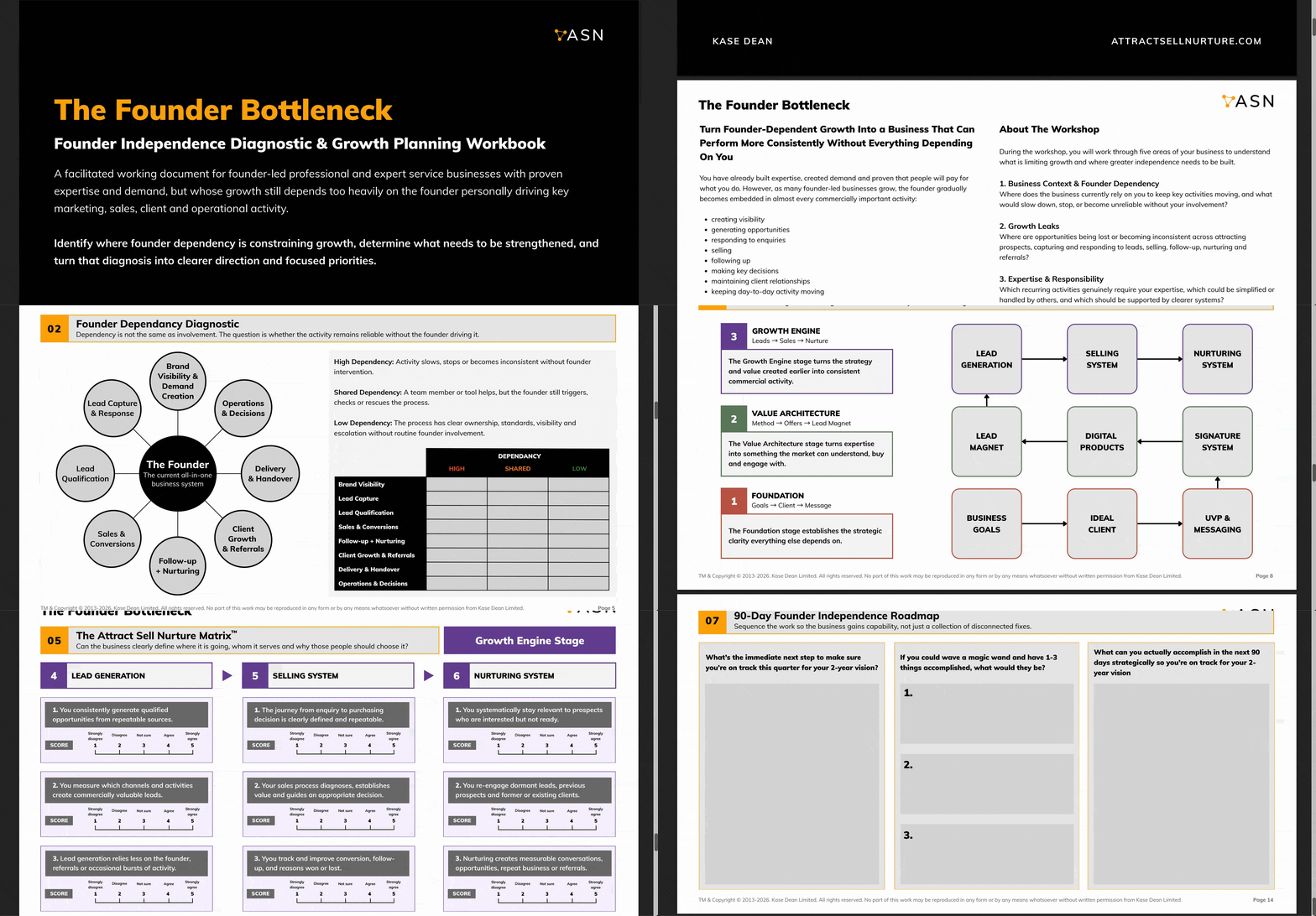
The ASN System™ perspective treats this as a routing decision: founder attention goes to deals where a human conversation changes the outcome, while everything else moves to an automated nurture track that stays warm without consuming calendar time.
The most persistent misconception is that volume fixes conversion. If the initial call did not surface a real problem, no quantity of follow-ups will manufacture one – a follow-up email after an initial sales call can only amplify value that already exists.
There is also the intro dilemma. When your contact mentions a decision-maker, resist emailing them cold. Ask for the introduction, give your contact a forwardable paragraph, and protect the relationship that got you in.
Where to Look Next for Sales Excellence
For technical products, manufacturer documentation remains the authority on specifications you may be asked to defend in writing. In regulated sectors – finance, healthcare, insurance – consult the relevant standards bodies before making any claim in a follow-up. And for the persuasion mechanics underneath all of this, academic texts on consumer psychology and decision science offer far more durability than recycled sales blogs.
Frequently Asked Questions About Sales Follow-Ups
A prospect said “send me an email” after a cold call. Now what? Send it within the hour, reference their exact words, and include one question that requires a reply.
How do you professionally say you’ll follow up? Name the date and the deliverable: “I’ll send the scope Tuesday.”
How should new leads be managed? Log every touch in your CRM and schedule the next one before closing the record – especially after a discovery call follow-up email.
What You Need to Know: The Sales Follow-Up Summary
Deal velocity is won or lost in the hours after the call ends. The founders who close consistently are not the ones with the cleverest copy – they are the ones with a system that fires reliably while the conversation is still warm.
- Speed is a differentiator. Target the 24-hour window. Momentum compounds, and so does silence.
- Value beats volume. Every message must give the prospect a reason to reply that is better than “just checking in.” New information, a resolved objection, a useful resource.
- Systems create scale. Manual reminders fail the moment your pipeline grows. Move to a structured cadence – the 2-2-2 rule or The ASN System™ – so nothing depends on memory.
- AI drafts, humans send. Let automation handle transcription and first drafts. Keep founder-level judgment on the sentences that carry trust, tone, and the close.
The strategic choice is not speed or personalisation. It is knowing which deals need both.
Key Takeaways for Immediate Implementation
Open your sent folder and audit the last ten subject lines for specificity – replace every generic one with a project name or next step. Pick three weak phrases from your templates and delete them today. Then set calendar triggers at the two-hour, two-day, and two-week marks so your cadence runs whether or not you remember it.
Sources and References
This guide draws on practitioner methodology and observed patterns in sales communication rather than external datasets. No third-party statistics, studies, or proprietary research findings are cited. Frameworks referenced – the 24-hour window, the 2-2-2 cadence, and The ASN System™ – are described as operational practices, not as measured performance claims.